
It starts with a simple mission: get rid of the weeds. But in the heat of battle, it’s easy to go overboard.
In Idaho Falls, we see it all the time—homeowners who trade a few dandelions for giant brown circles of dead turf. If your lawn is turning brown faster than the weeds are dying, you might have accidentally sabotaged your own grass.
The most common culprit is using the "glug method" instead of precise measurements, or worse, grabbing a non-selective herbicide that kills everything it touches.
In our high-desert climate, grass is already under stress; adding too much chemical "firepower" can push it over the edge.
Knowing the difference between a lawn that is temporarily stressed and one that is permanently dead is the key to your next move. The pattern of the damage usually tells the whole story. Whether you’ve got isolated spots or a total brown-out, there are specific steps you need to take immediately to neutralize the chemicals.
Don't panic and reach for the seed bag just yet. Timing is everything when it comes to reviving a chemically damaged lawn in Eastern Idaho.

Keep reading to learn how to identify the signs of herbicide damage and professional tricks for flushing toxins to give your grass a second chance.
Herbicide Damage to Grass: The Big Mistake
There you are on Saturday morning, hanging out in the weed killer aisle at the home improvement store. (It’s where all the cool people hang out, right?)
So you buy a jug of Roundup weed killer and start spraying the weeds in your lawn.
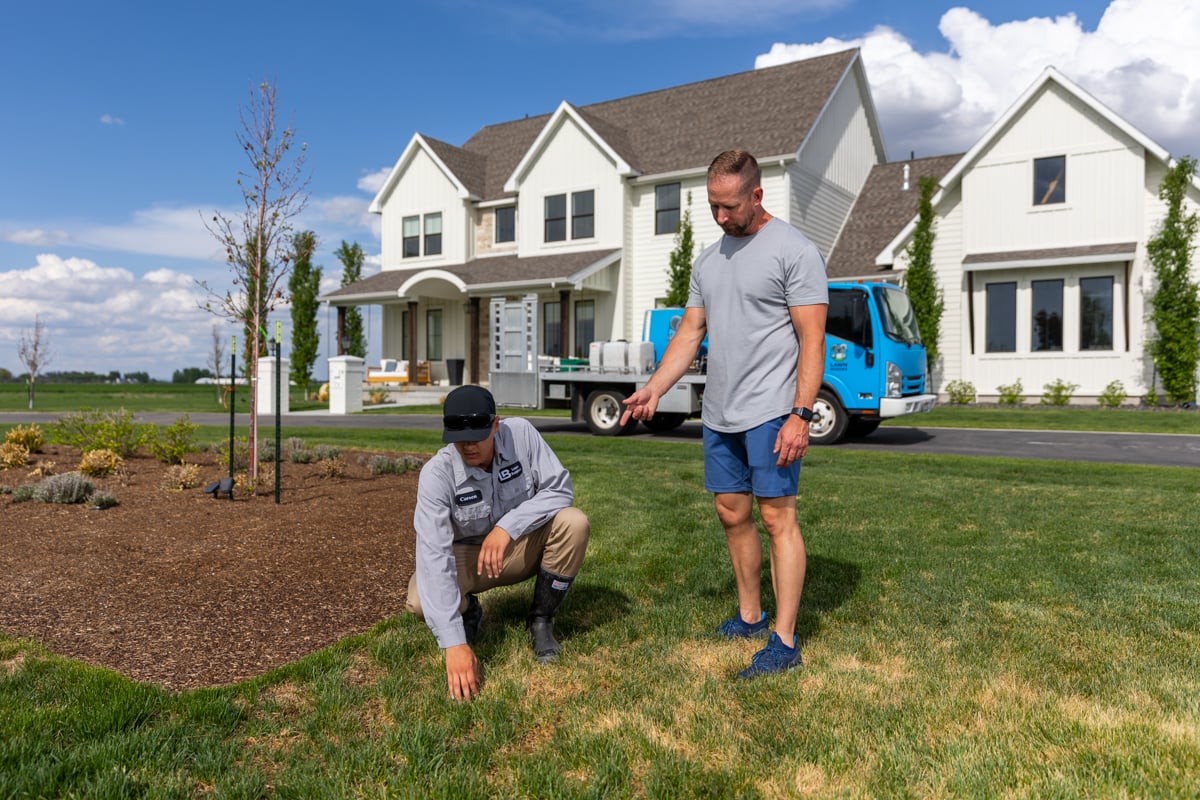
Big mistake — and the most common mistake weed-killing homeowners make, Beardall says.
Roundup is non-selective weed control, which means it kills everything it touches. Not just weeds.
Bye, grass. You’ll see big brown circles of dead grass wherever you sprayed.
Another “weed killer killed my grass” scenario?
”Or, they’ll forget what product was in their sprayer and just go use that on the lawn,” he says. Turns out it was filled with a non-selective herbicide containing glyphosate, and it killed everything.
How Do You Know If You Put Too Much Weed Killer on Your Lawn?
Suddenly see a bunch of brown after a weed-killing session?
“If they broadcast spray their lawn with too much herbicide, it will generally just turn it brown really quickly,” Beardall says. “It can be confused with insect damage, but the pattern of the dead grass is what will typically set it apart from insect damage.”
What’s he mean by that?
If you spot treat your lawn for weeds, the dead areas will just be isolated around the weeds. If you treated the whole lawn, then the whole lawn goes brown and the herbicide damage to grass “is pretty obvious,” he says.
Super Important: Know the Difference Between Selective and Non-Selective Herbicides
You’ll spare yourself a lot of grief if you remember the key difference.
Non-selective herbicides will kill everything they come in contact with — weeds, grass, flowers, plants.
Selective herbicides are designed to selectively control certain weeds. They won’t kill your grass.
Also, be sure to follow the label to avoid putting too much weed killer on your lawn, Beardall says.
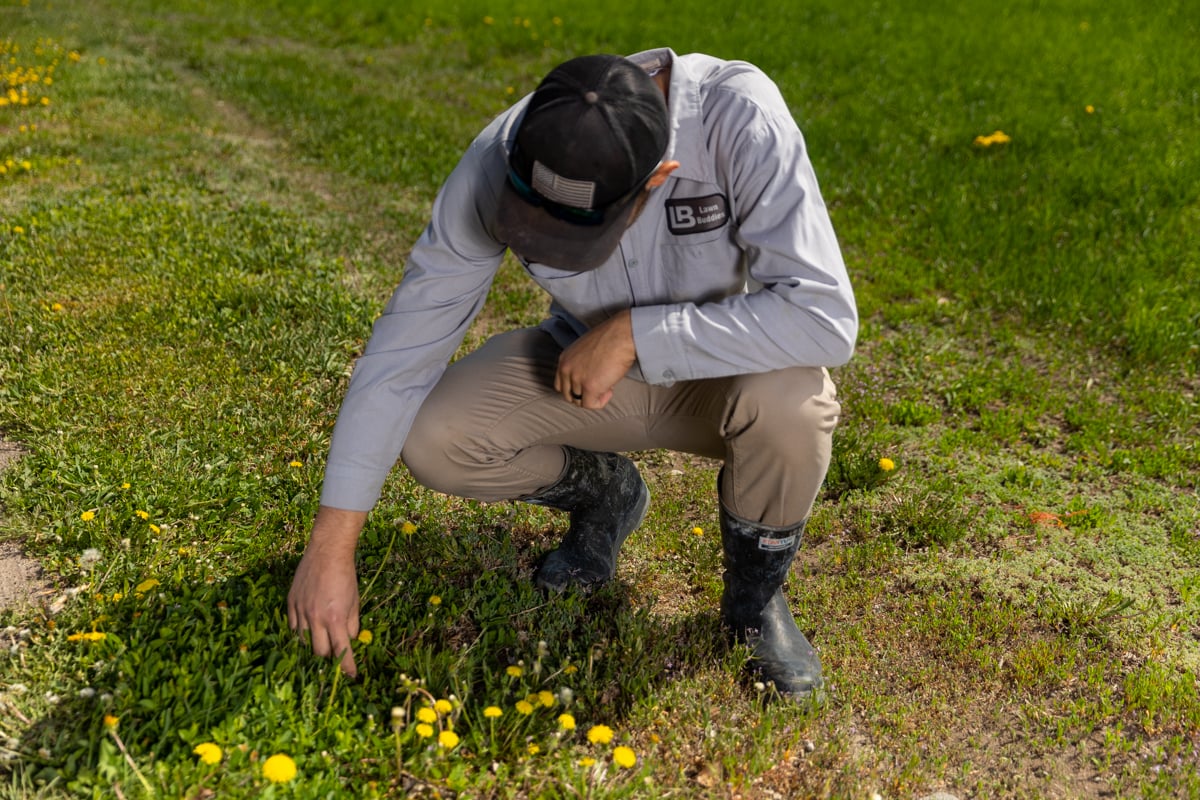
“Most homeowners don't use any type of measuring device when putting product into their sprayer,” he says. “They use the ‘glug method.’ They think that three ‘glugs’ is good per gallon of water or per sprayer.”
Actually, many products only require 1-2 ounces per gallon of water, he says. Yikes. That’s not three glugs.
“So, it ends up costing them a lot more in product as well because they don't measure right,” he says. Always read the label.
Here’s a Good Tip: Use Separate Sprayers
“If a homeowner is going to do herbicide treatments on their own, it's wise to have separate sprayers,” Beardall says. “One for spraying weeds in the driveway and flower beds, and then one that‘s only used for the lawn that won't harm grass.

“And mark them so that they don't forget which one is used where.”
How to Revive Grass After Weed Killer
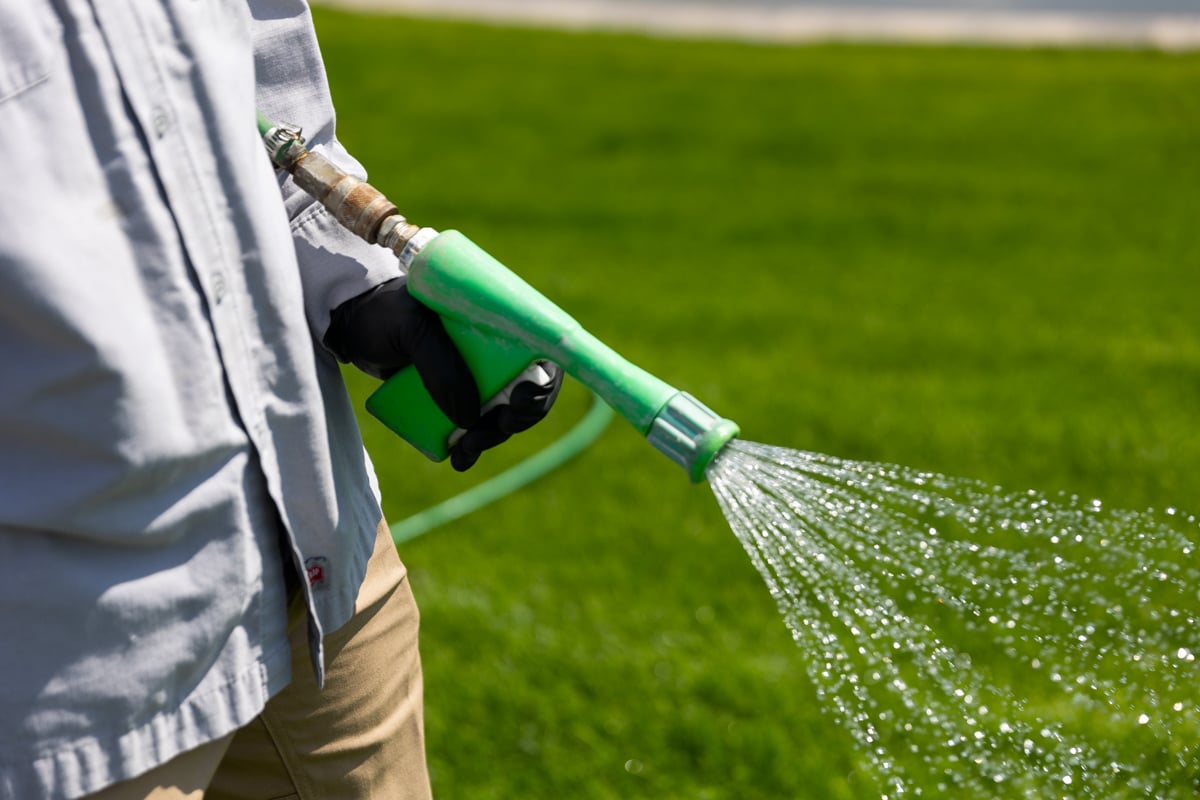
First, try water.
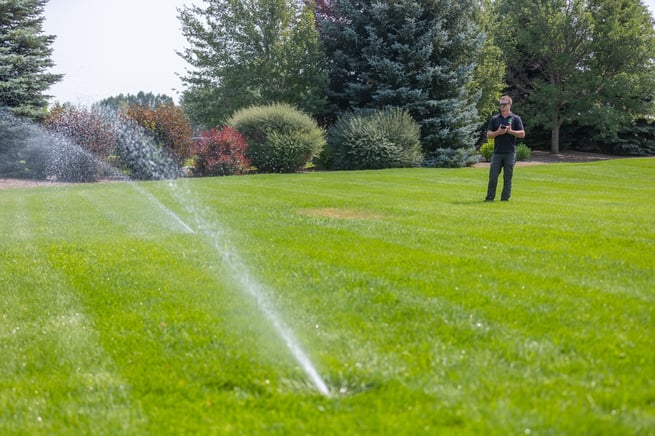
“The best thing to do is to water a lot to try and dilute that product as much as possible and help make its way through the plant,” Beardall says. Sometimes, the lawn will recover, he says, but if it's really bad, you’ll need to re-seed.
“Some herbicides have a reseeding interval of several weeks,” he says, “so it's important to check the label before just throwing down seed after this type of incident.”
Better Yet, Leave Weed Control to the Pros
“Weed killer killed my grass!” Avoid that sad statement by hiring professional weed control.
Why deal with the hassles of weed control — including keeping track of selective vs non-selective and figuring out the right amounts — when you can hand the whole pesky task over to the pros?
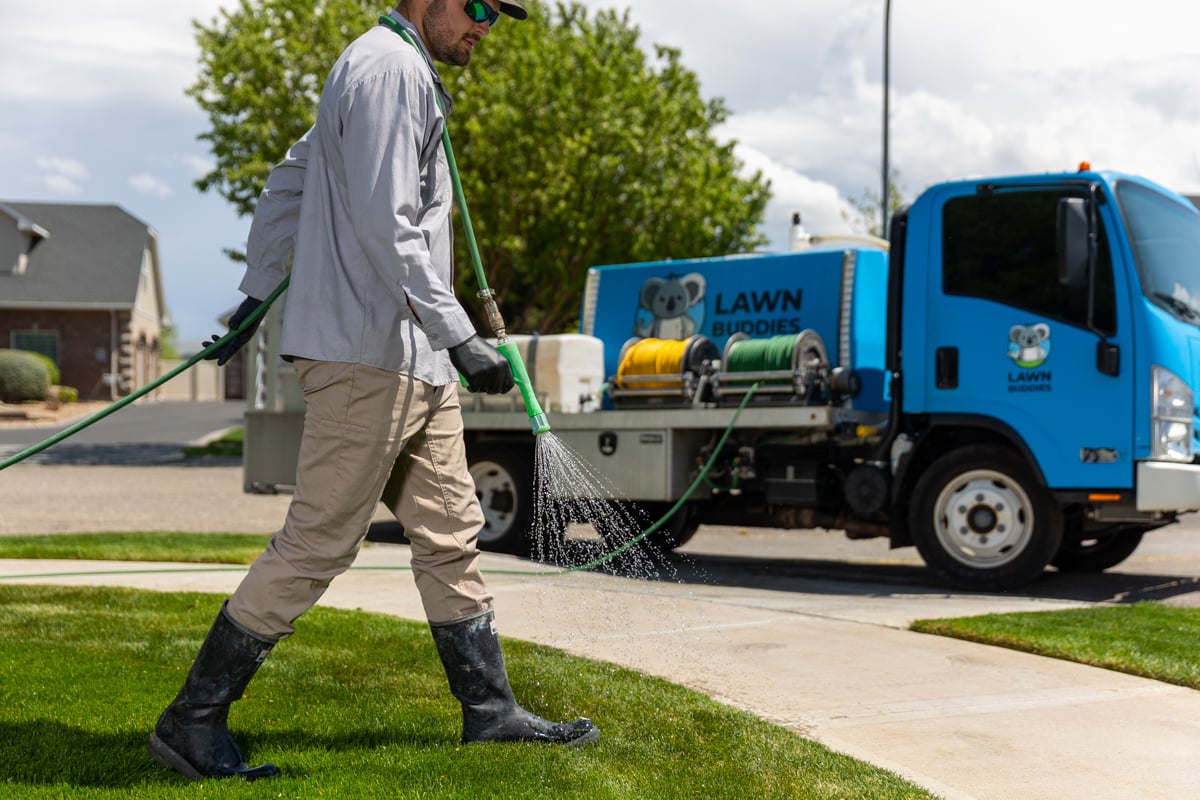
Professionals have access to weed control products you can’t use without a license. And they can custom-mix products or mix them at higher concentrations than the pre-mixed products homeowners can buy at the store. Even better: they know the precise amounts to use without damaging your lawn.
It’s one great reason to hire an Idaho lawn care service. Another reason: you don’t have to worry about buying and storing chemicals in your garage.
When you choose Lawn Buddies in Idaho Falls, you get one premium, six-visit lawn care program that includes everything your lawn needs to grow healthy and green, including weed control that’s perfectly timed throughout the year.
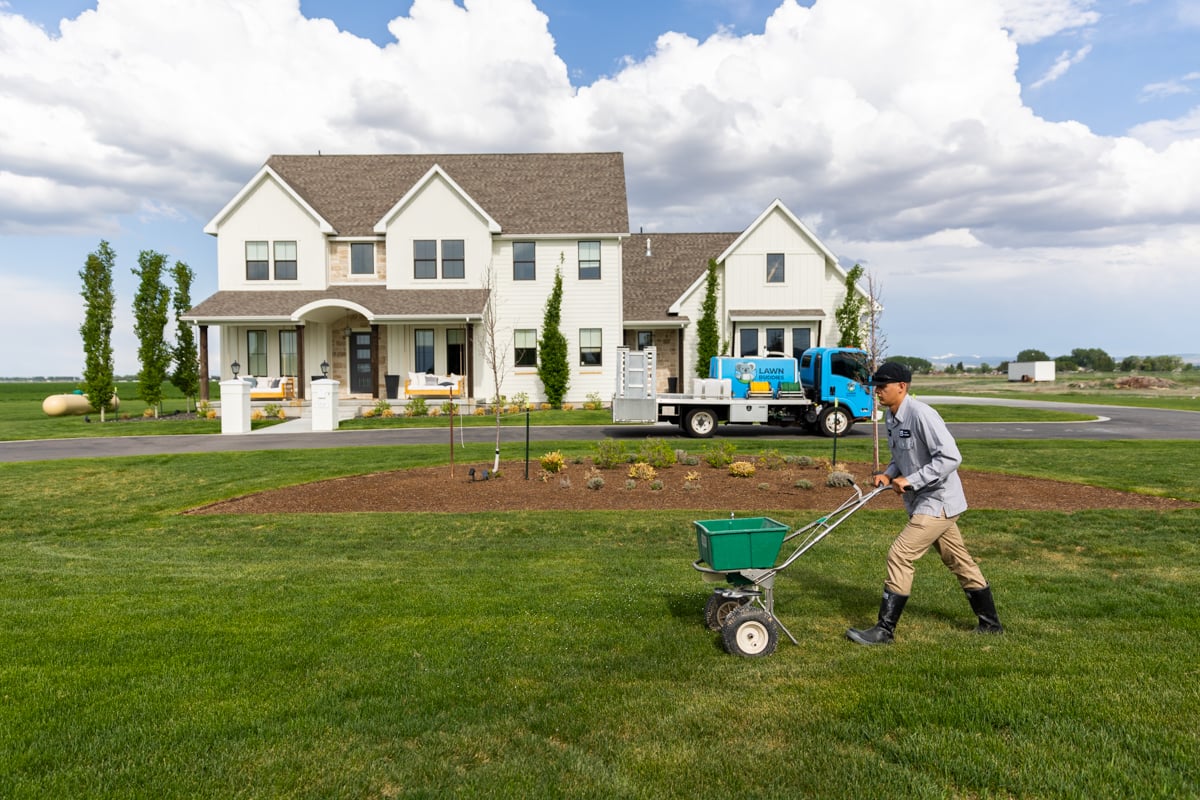
Most weeds are banished over the course of the six-step program.
But some extra-tough weeds like thistle, field bindweed, and black medic often require a different herbicide, which is an additional visit on top of the normal lawn treatment.
Controlling weeds is a process, not a one-shot deal.
Help Prevent Weeds with a Healthy Lawn
The best method of weed control is establishing healthy turf, including proper fertilization, watering, and mowing.
Weeds hate a thick, healthy lawn. Dense grass crowds out weeds and blocks the sunlight their seeds need to sprout.
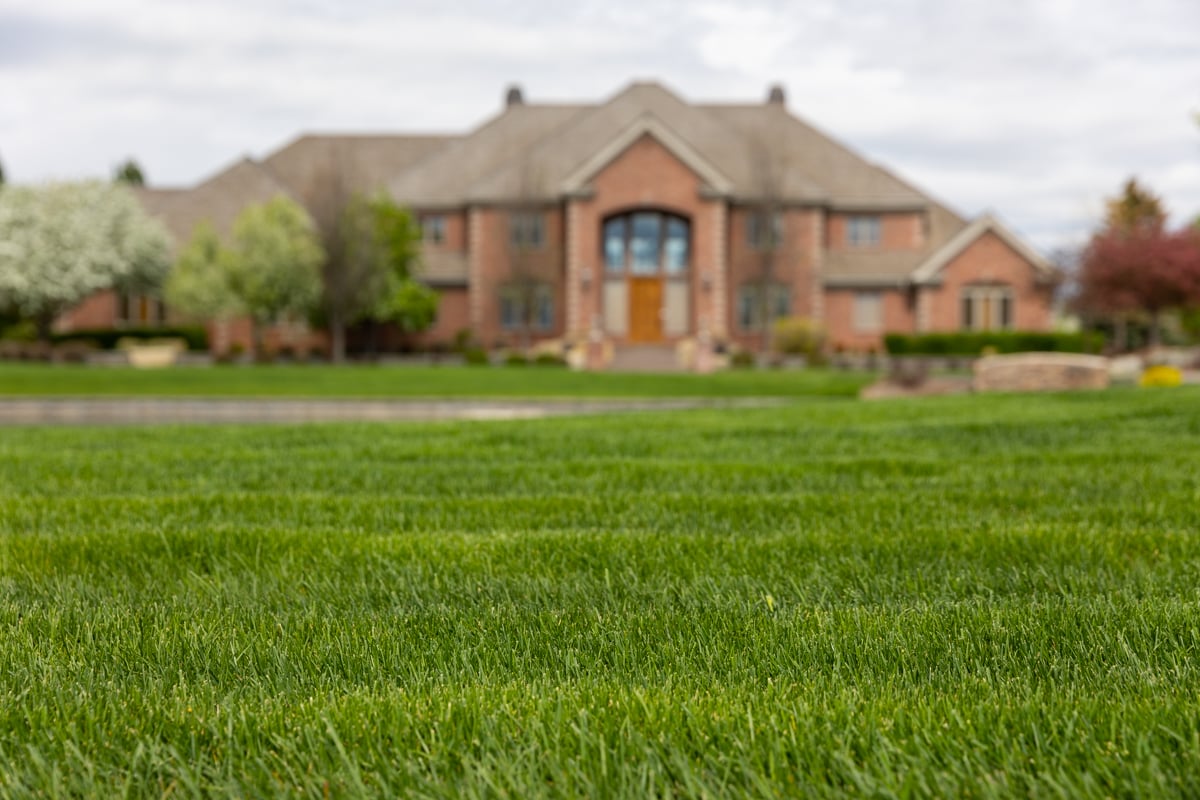
Weeds love to push through struggling lawns, taking over weak spots. So your best line of defense is to keep your grass thick, lush and healthy with an annual lawn care maintenance program that supports strong roots.
Then weed seeds will have a tougher time sprouting.
Is Your Lawn Ready for a New Best Friend?
Stop worrying about weeds and partner with an Idaho lawn care company that’s an expert in weed control.
Choose a professional lawn care service in the Idaho Falls, ID area that bundles your yard’s most-needed treatments into one convenient, no-fuss plan that tells you the cost up front.
Fertilizer, weed treatments, and grub control, all wrapped up in six visits, each perfectly timed throughout the season, so your grass is green and strong and resists weeds.
Got a few minutes? That’s all you need to get started. Just fill out the form on this page, call us at (208) 656-9131 or read more about our services. Then you can kick back and relax in your healthy, thriving yard.